Valley Fever Awareness Training
California · Online · about 30 minutes of material · go at your own pace
This course covers what Valley Fever is, where and when the risk is highest, who is at higher risk, how to keep dust and spores out of your lungs, the signs and symptoms, and what to do if you get sick.
- 8 short lessons. Supervisors get a 9th lesson.
- A quick check question at the end of each lesson.
- A final quiz. You need 80% to pass. You can retake it as many times as you need.
- When you pass, send your results to your employer or print your training record.
Dashed boxes marked At your worksite list things your employer has to tell you about your own job. Ask your supervisor about each one.
For employers: how to use this course
What it covers
All eight training topics in Labor Code §6709(c)(1) through (8), plus a supervisor lesson on planning dusty work and responding when a worker reports symptoms.
Who has to train, and when
- Who: construction employers with workers at sites in counties where Valley Fever is highly endemic (more than 20 cases per 100,000 people a year), where work disturbs the soil: digging, grading, other earth moving, driving on dirt roads, or high winds.
- Where: the law names Fresno, Kern, Kings, Madera, Merced, Monterey, San Joaquin, San Luis Obispo, Santa Barbara, Tulare, and Ventura Counties, and isn't limited to them. A county newly shown as highly endemic in CDPH's annual report is covered starting the year after it's first listed. Check CDPH's latest county rates each year.
- When: every year by May 1, and before a worker starts work reasonably expected to cause substantial dust disturbance (visible airborne dust for a total of one hour or more on any day).
- How: as part of your IIPP training or as a standalone program. Agency materials from CDC, CDPH, or local health departments can be used.
Employers outside those counties or outside construction can use the course too. Cal/OSHA also addresses Valley Fever under §3203 (IIPP), §5141, §5144, §342, and §14300.
What you still provide
- Your site's dust controls and plan. Several topics depend on them, so the course tells workers to ask. Review these items with each worker before dusty work starts. The training record has a sign-off line for it.
- A respirator program under §5144 where respirators are required: medical evaluation, fit testing, and respirator training. This course explains respirators but doesn't replace fit testing or §5144 training.
- A medical provider who knows Valley Fever, and your procedure for reporting symptoms.
- Records and reports: an Employer's Report (Form 5020) for each suspected work-related case, the Log 300, and reporting hospitalizations and deaths to Cal/OSHA.
- Training in a language your workers understand. This version is in English.
- Someone workers can ask questions. Add a contact in the file's settings or point them to their supervisor.
Getting results
When a worker passes, they can email the results to the address you set in the file's settings (open the file in a text editor and find CONFIG), or type in an address. They can also print or save a training record, which shows the next May 1 due date.
Answer key
The quiz checks answers inside the file, so the key is in the file's code. Each topic has two versions of its question, and a retake switches versions.
1. What Valley Fever is and how you get it
About 4 minutes
Valley Fever (coccidioidomycosis, or "cocci") is an illness caused by a fungus that lives in the soil in many parts of California. It usually affects the lungs. For some people it can be serious, and in rare cases it can kill.
How you get it
The fungus grows tiny spores, too small to see. When soil is disturbed by digging, grading, or driving, or by high winds, the spores go up with the dust. You get Valley Fever by breathing that dust in.
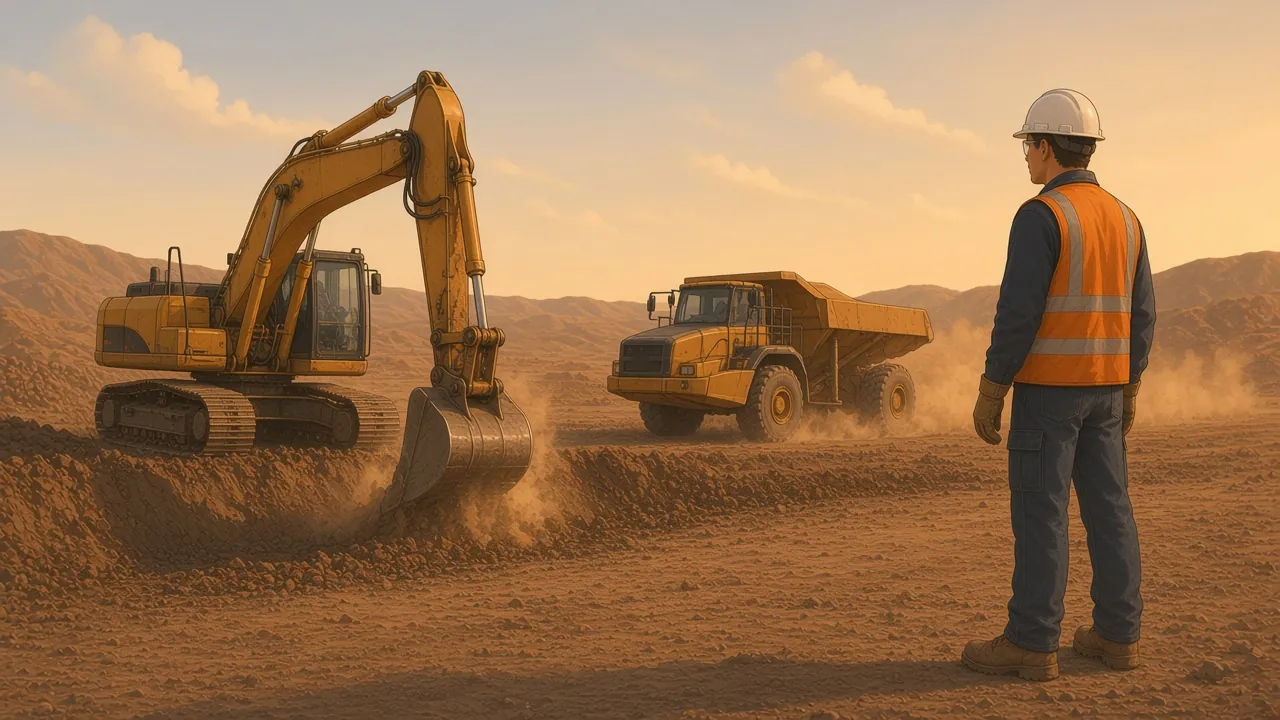
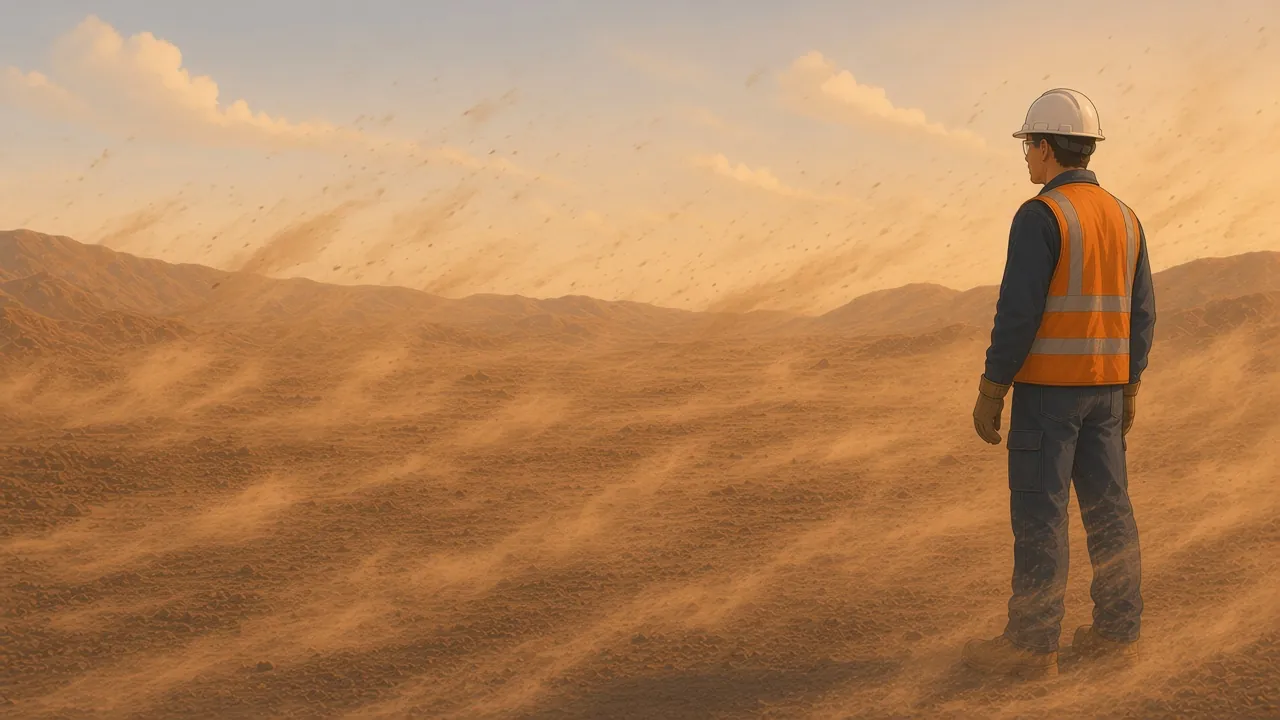
Tap a button to see how spores get into the air.
Spores are drawn much larger than they are. Real spores are too small to see.
- It isn't contagious. You can't catch it from another person or from an animal.
- There's no vaccine. Keeping dust out of the air and out of your lungs is the protection.
- You can't see or test the soil for it on the job. Treat dust in Valley Fever areas as if it carries spores.
What happened to one crew. In October 2007, a crew dug a trench for a new water pipe in California. 10 of the 12 workers got Valley Fever. None of them wore respirators. Together they missed at least 1,660 hours of work, and two were on disability for at least five months.
- Is your worksite in an area where Valley Fever is common?
2. Where and when the risk is highest
About 4 minutes
High-risk areas
Valley Fever is most common in the Central Valley and the Central Coast. The highest rates are in the southern San Joaquin Valley (Fresno, Kern, Kings, Madera, and Tulare Counties) and San Luis Obispo County. Cases have been reported in counties all over the state, and they've been rising in places like Monterey, Santa Barbara, San Joaquin, Stanislaus, and Sacramento Counties.
California's Valley Fever training law names these counties, and more can be added as rates change:
- Fresno
- Kern
- Kings
- Madera
- Merced
- Monterey
- San Joaquin
- San Luis Obispo
- Santa Barbara
- Tulare
- Ventura
High-risk work
Any work that puts soil into the air:
- Digging, trenching, and excavation
- Grading and other earth moving
- Dumping soil, drilling, and blasting
- Driving on dirt roads
Jobs with the most risk include construction (especially road building, excavation, and solar projects), mining, quarrying, oil and gas, wildland firefighting, archaeology, and geology. Farm work can carry risk too, though cultivated, irrigated soil may be less likely to hold the fungus than undisturbed ground.
High-risk conditions
- Wind and dust storms, which can carry spores even when no one is digging
- Dry, bare, or undisturbed ground
- Late summer and fall, when the most people get infected
Dusty work adds up
The law calls it substantial dust disturbance when there is visible airborne dust for a total of one hour or more on any day. Workers need this training before that kind of work starts.
Example day. Your tasks and times will be different.
- Which tasks on your site raise the most dust?
- Who decides when work stops for high wind?
3. Who is at higher risk
About 3 minutes
Anyone can get Valley Fever, including healthy, young workers. Some people are more likely to get very sick, or to have the infection spread beyond the lungs, if they're infected:
- People who are pregnant, especially later in pregnancy
- People with diabetes
- People with a weakened immune system, including from HIV or AIDS, an organ transplant, cancer or chemotherapy, or medicines that suppress the immune system, like corticosteroids (such as prednisone) or TNF inhibitors
- Adults 60 and older
- People who are African American or Filipino, according to the California Department of Public Health
Your health information is private. You don't have to share it with coworkers. If any of these apply to you, talk to your doctor about working in dust where Valley Fever is common. You can also ask your employer about extra protection.
If you've had it before
Once you've had Valley Fever, your body will most likely protect you from getting sick from it again. That can change if your immune system gets weaker later, from cancer or certain medicines, for example.
4. Keeping dust down at the site
About 4 minutes
The best protection is keeping spores out of the air in the first place. Cal/OSHA lists these controls for dusty work in Valley Fever areas:
- Disturb as little ground as possible.
- Water the soil before and during digging and grading, or use soil stabilizers or replanting to hold dust down.
- Tarp or stabilize spoils piles so wind can't pick them up.
- Enclosed, air-conditioned cabs on equipment that makes dust, with windows and outside air vents closed.
- Stop work in heavy wind.
- Keep workers upwind of digging, grading, driving, dumping soil, drilling, and blasting.
- Clean wet. Use water, wet methods, or a HEPA vacuum on dusty tools, equipment, and surfaces. No compressed air and no dry sweeping.
- Keep break and eating areas clean and away from dust.
- Clean tools, equipment, and vehicles before they leave the site.


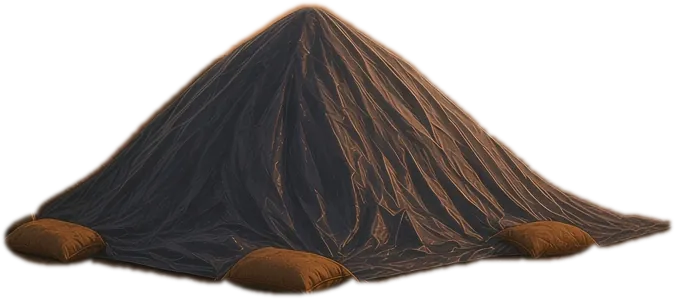
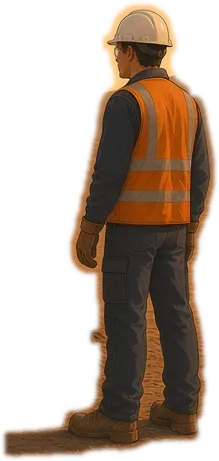
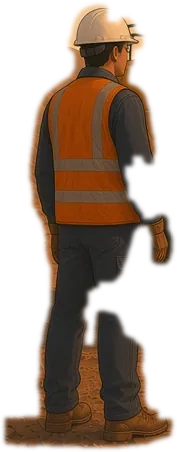
Illustration only. Not measured data.
Your part
Use the controls. Keep cab windows and vents closed. Tell your supervisor when dust control isn't keeping up, like when the water truck can't keep the haul road wet or the wind picks up.
- What dust controls are used on your site?
- How do you ask for more water on a dusty area?
5. Protecting yourself
About 5 minutes
Keep dust off your food and out of your mouth
- Wash your hands and face before you eat, drink, or smoke.
- Keep water jugs, cups, and food covered.
- Eat and take breaks in a clean area away from the dust.
Don't take the dust home
- Change into clean clothes and shoes before you leave the site. Use coveralls, change rooms, and showers if they're provided.
- Don't shake out dusty clothes. Bag them, and warn whoever washes them.
- Clean dusty tools and equipment with water or wet methods when you can.
- Work upwind of the dust when you can.
Respirators when dust can't be avoided
When you can't avoid the dust, a respirator is the protection. It has to be NIOSH-approved with particulate filters rated N95, N99, N100, P100, or HEPA.
Your employer picks the respirator based on the work and the dust.
- Required respirators come with a program. Under Cal/OSHA's respirator rule (§5144), you get a medical evaluation, a fit test, and training before you use one, and your employer covers cleaning, storage, and replacement.
- The seal matters. Facial hair where the respirator seals to your face lets dust leak in. Do a seal check every time you put it on.
- Replace an N95 when it's dirty, damaged, wet, or hard to breathe through.
- Wearing one by choice? If you wear a respirator when it isn't required, your employer still has to give you the information in Appendix D of §5144.
- Which respirator, if any, is required for your tasks? Have you been medically cleared and fit tested?
- Where do you wash up and change clothes?
- Where are the drinking water and eating areas, and how are they kept clean?
6. Signs and symptoms
About 4 minutes
About 6 in 10 people who get infected never have symptoms. People who do get sick usually start having symptoms 1 to 3 weeks later.
Common symptoms
- Feeling very tired
- Cough
- Fever
- Shortness of breath
- Headache
- Muscle aches or joint pain
- Rash on the upper body or legs
- Chest pain
- Night sweats
- Weight loss you can't explain
The main clue: it feels like a cold, the flu, COVID-19, or pneumonia, but it lingers longer than usual. Valley Fever symptoms can last a month or more.
Based on California Department of Public Health information.
When it spreads
In rare cases, the infection spreads beyond the lungs to the skin, bones, joints, or brain. This is called disseminated Valley Fever, and it can be very serious.
See a doctor right away for trouble breathing, chest pain, a stiff neck, new headaches that keep coming back, painful swollen joints, or sores on the skin.
7. Report it early and see a doctor
About 3 minutes
Early diagnosis and treatment matter. Valley Fever medicine works best in the early stages, and catching it early helps keep the disease from getting worse.
- Tell your supervisor. Report symptoms that last a week or more, especially after dusty work. Report it even if you aren't sure.
- See a doctor. Your employer should send you to a medical provider for an evaluation.
- Tell the doctor about your work. Say you work around dust where Valley Fever is common, and ask whether you should be tested. Valley Fever is easy to mistake for other illnesses.
- Get tested. A blood test or chest X-ray helps the doctor find out whether it's Valley Fever.
- Follow up. Take any medicine as prescribed and keep your follow-up appointments.
There are no over-the-counter medicines for Valley Fever. Antibiotics treat bacteria, not fungus, so they won't treat it.
Your rights
Valley Fever from dust at work is a work-related illness, and it can be covered by workers' compensation. You can't be punished for reporting a work-related illness or filing a claim.
- Who do you report symptoms to?
- Which clinic or doctor does your employer use?
8. Treatment and recovery
About 3 minutes
Treatment
- Many mild cases get better without treatment. A doctor decides whether you need medicine.
- People who need treatment take antifungal medicine. Some take it for months or even years, especially with severe disease or a weakened immune system.
- When the infection spreads beyond the lungs, some people need medicine for the rest of their lives.
What to expect
- Most people make a full recovery. Many symptoms go away within a few weeks. Tiredness can take longer and sometimes lasts several months.
- Some people miss weeks or months of work.
- A small number of people develop long-term infections in the lungs or other parts of the body.
- Severe Valley Fever can be fatal, but this is rare.
- After you recover, your body will most likely protect you from getting sick from it again.
Prevention is still the goal. The dust controls and respirators in lessons 4 and 5 are how you avoid getting it in the first place.
9. Supervisors
About 4 minutes
Supervisors put the dust controls in place and are often the first to hear about symptoms. You need everything in lessons 1 to 8, plus the following.
Before dusty work starts
- Know whether the site is in an area where Valley Fever is common.
- Make sure the crew has had this training before dusty work, and every year by May 1 if your company falls under §6709.
- Plan dust control: water or stabilizers, tarps for spoils, as little ground disturbed as the job allows.
- Put operators in enclosed cabs with windows and vents closed, and keep ground crews upwind.
- Plan respirators for tasks where dust can't be avoided, and confirm workers are medically cleared and fit tested.
- Set up clean break and eating areas, a place to wash up, and a way to change out of dusty clothes.
During the day
- Watch the wind and the forecast. Stop dust-producing work in heavy wind.
- Fix dust control that isn't keeping up.
- No compressed air or dry sweeping for cleanup.
- Clean equipment and vehicles before they leave the site.
When a worker reports symptoms
- Take it seriously and don't discourage reporting.
- Follow your company's reporting procedure.
- Send the worker to your company's medical provider, one that knows Valley Fever. Tell the provider where the site is and that the worker was exposed to dust that may contain spores.
- The employer completes an Employer's Report of Occupational Injury or Illness (Form 5020) for each suspected work-related case, and records cases on the Cal/OSHA Log 300.
- Hospitalizations and deaths have to be reported to Cal/OSHA right away.
- Your company's procedures for dust control, respirators, and responding to and reporting illness.
Final quiz
Answer every question, then press Submit. You need to pass. If you don't pass, you'll see which topics to review and can retake the quiz as many times as you need.
Topics to review
These are the topics you missed. Review the lesson, then retake the quiz. The retake has new questions on the same topics.
Acknowledgment
Send your results
Check the acknowledgment box first. Send needs an email address.
Email didn't open? Copy your results instead
Copy the text below and send it to your employer.
Before dusty work starts, make sure your supervisor has gone over the worksite items from the dashed boxes: dust controls, when work stops for wind, respirators, where to wash up and change, and who to report symptoms to.