Wildfire Smoke Protection Training
California · Online · about 30 minutes of material · go at your own pace
This course covers Cal/OSHA's wildfire smoke rule: what smoke does to your body, how to read the Air Quality Index, what your employer has to do, and how to wear an N95 the right way.
- 8 short lessons. Supervisors get a 9th lesson.
- A quick check question at the end of each lesson.
- A final quiz. You need 80% to pass. You can retake it as many times as you need.
- When you pass, send your results to your employer or print your training record.
Dashed boxes marked At your worksite list things your employer has to tell you about your own job. Ask your supervisor about each one.
For employers: how to use this course
What it covers
All of the training information in Appendix B to §5141.1, items (a) through (h), plus an overview of when the rule applies and what it requires. Lesson 9 adds topics for supervisors. Section 5141.1(e) requires effective training in a language and manner employees readily understand, with at least the Appendix B information.
What you still provide
- Your own procedures. Appendix B leaves spaces for the employer's communication system and the employer's methods for protecting employees. The dashed "At your worksite" boxes point workers to these. Review them with each worker. The training record has a sign-off line for it.
- NIOSH-approved respirators, such as N95s, for everyone at AQI 151 and above, plus the encouragement to use them.
- If workers could be in smoke above AQI 500, a respiratory protection program under §5144, including fit testing and medical evaluation. This course doesn't fit-test anyone.
- Plans made in advance for prompt medical treatment of anyone made seriously ill by smoke.
- Training in a language your workers understand. This version is in English.
- Someone workers can ask questions. Add a contact in the file's settings or point them to their supervisor.
Getting results
When a worker passes, they can email the results to the address you set in the file's settings (open the file in a text editor and find CONFIG), or type in an address. They can also print or save a training record.
Answer key
The quiz checks answers inside the file, so the key is in the file's code. Each topic has two versions of its question, and a retake switches versions.
1. Wildfire smoke and your health
About 4 minutes
Wildfire smoke is a mix of gases and tiny particles from burning trees, brush, buildings, vehicles, and anything else in a fire's path. For people who aren't right next to the fire, the main danger is the particles.
PM2.5
The most harmful particles are called PM2.5. They're 2.5 micrometers across or smaller. An average human hair is about 30 times wider. Particles that small get past your nose and throat and travel deep into your lungs.
What smoke can do
- Irritate your lungs, causing coughing that won't stop, phlegm, wheezing, or trouble breathing
- Burning eyes and a sore throat
- More serious harm: reduced lung function, bronchitis, worse asthma, heart failure, and early death
Who's at higher risk
- People over 65
- People with heart or lung problems, including asthma
If that's you, talk to your doctor about working in smoke.
Your right to medical treatment
If you show signs of illness from wildfire smoke, your employer has to let you get medical treatment and can't punish you for it. Employers also have to plan ahead so anyone seriously sickened by smoke gets treated quickly.
- How do you get medical treatment if smoke makes you sick? Who do you tell?
2. Reading the Air Quality Index
About 4 minutes
The Air Quality Index (AQI) turns air pollution into a number from 0 to 500. The higher the number, the worse the air. For wildfire smoke, the number that matters is the AQI for PM2.5.
Drag the slider to try any AQI. The colors match the ones on AirNow and in news reports.
Where to check the AQI
- AirNow.gov and its fire and smoke map at fire.airnow.gov
- Your local air district's website
- Text or email alerts from EnviroFlash
- No internet? Ask your employer. They have to tell you the current AQI.
Go by the current AQI, not just the forecast. Smoke can change fast when the wind shifts.
- How does your employer tell you the current AQI: text, radio, pre-shift meeting, or posted sign?
3. When the rule applies
About 3 minutes
Title 8 §5141.1 applies when the current AQI for PM2.5 is 151 or higher and your employer should reasonably expect you could be exposed to wildfire smoke.
Who isn't covered
- Work in enclosed buildings with filtered ventilation, when windows, doors, and bays stay closed except to go in and out
- Work in enclosed vehicles with a cabin air filter, with windows and doors closed except to get in and out
- Worksites where the employer measures the air and shows the AQI is below 151
- Workers exposed to AQI 151 or higher for a total of one hour or less in a shift
- Wildland firefighters
The same goes for vehicles: cabin air filter on, windows and doors closed.
The one-hour exemption counts your total time in the smoke for the whole shift. Ten 10-minute trips outside add up to 100 minutes, so the rule applies.
4. What your employer has to do
About 3 minutes
When the AQI for PM2.5 is 151 or higher, your employer has to:
- Check the AQI at the start of each shift and periodically after that, from AirNow or another government source, or by measuring the air on site.
- Tell you the current AQI and what protection is available.
- Train you on wildfire smoke and the company's procedures.
- Lower your exposure (lesson 5).
- Provide respirators and encourage you to use them (lesson 6).
Communication goes both ways
Your employer needs a system for warning you when the air is harmful, in a language and manner you understand. That system also has to encourage you to report these, without fear of reprisal:
- Air quality getting worse
- Symptoms such as an asthma attack, trouble breathing, or chest pain
- How will you hear about AQI changes during the shift?
- Who do you report worse air or symptoms to?
5. Lowering your exposure
About 3 minutes
Respirators help, but the first step is keeping smoke away from you.
Filtered air comes first
Where it's feasible, your employer moves work into enclosed buildings, structures, or vehicles with filtered air, to get your exposure below AQI 151. If that isn't enough, they lower it as much as they can.
Then changes to how the work gets done
- Move work to a place with a lower AQI
- Change the work schedule
- Cut time in unfiltered air
- More rest breaks, more often, in a filtered-air rest area
- Lighter work, so you breathe less hard
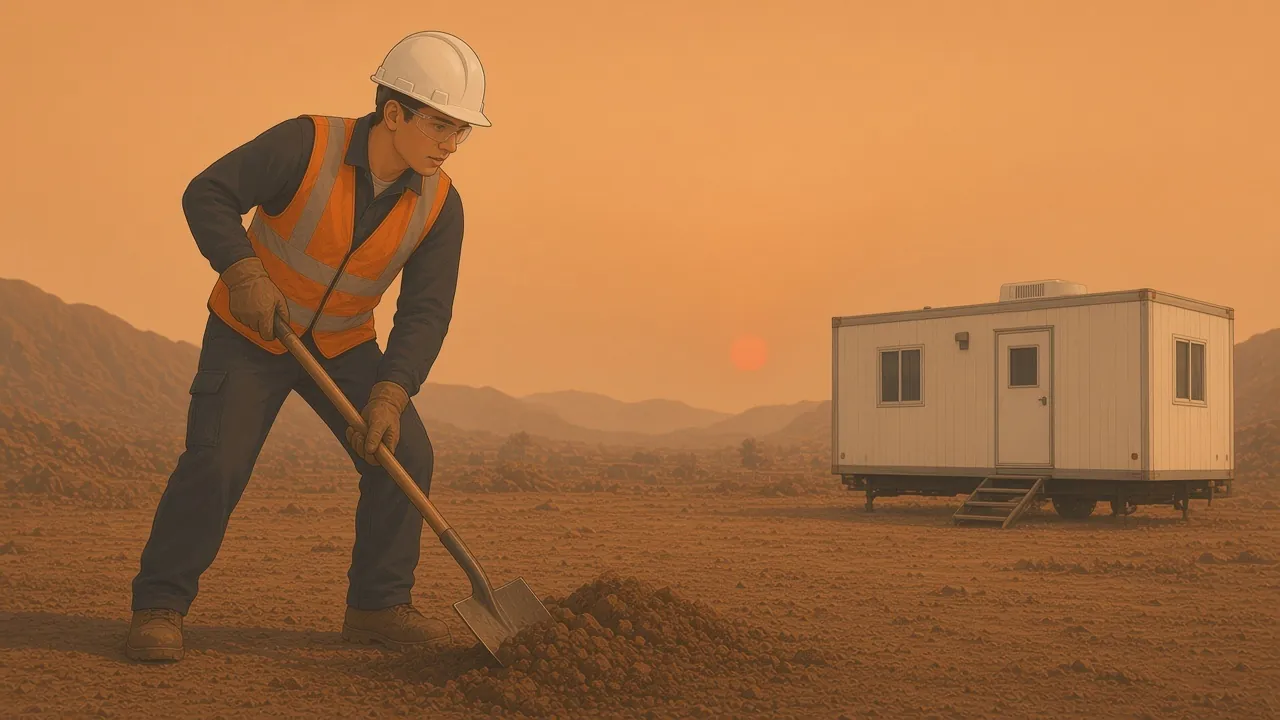
An illustration. Heavy work can mean breathing several times more air each minute than resting.
- Where is the filtered rest area or enclosed space?
- What work moves, slows, or stops when the AQI is high?
6. Respirators: what works and when
About 4 minutes
When respirators come in
- AQI 151 to 500: your employer provides NIOSH-approved respirators, such as N95s, for everyone, and encourages you to wear one. Wearing it is your choice.
- AQI over 500: respirators are required. Your employer has to run a full respiratory protection program, including fit testing and medical evaluation.
- Emergency work like rescue and evacuation, and utility, communications, and medical work that directly supports firefighting or emergency response: respirators are provided at 151 and up, and the over-500 requirement doesn't apply.
A respirator can help even below 151, especially if you have heart or lung problems. Ask for one.
An illustration of how each one performs against smoke particles. It isn't a measurement.
What counts
- A NIOSH-approved respirator, marked with "NIOSH" and an approval number. An N95 is the minimum.
- These don't protect you from smoke particles: surgical masks, cloth masks, scarves, T-shirts, and bandanas.
Limits to know
- An N95 filters particles. It doesn't protect against gases or vapors, like carbon monoxide.
- It doesn't supply oxygen.
- Breathing through it takes more effort. If you have heart or lung problems, ask your doctor before using one.
- Keep track of your own respirator. Don't share.
- For your own voluntary use, a medical evaluation, fit testing, and shaving are recommended but not required.
- Where do you get N95s, and which model does your employer provide?
7. Putting on and using an N95
About 4 minutes
An N95 only works if it seals tight against your face. If there's a gap, air takes the easy way in, around the edges.
Follow the instructions that come with your respirator. Seal checks vary by model.
Facial hair
Beards and stubble where the respirator touches your face break the seal, and smoke gets in around the edges. Loose-fitting powered air-purifying respirators (PAPRs) can be worn with facial hair.
When to replace it
- Replace it when it's damaged, deformed, dirty, or hard to breathe through.
- N95s are disposable. They can't be cleaned.
- Best practice is a new one at the start of each shift.
Get medical help right away if you have trouble breathing, dizziness, or nausea.
8. Symptoms, reporting, and heat
About 3 minutes
Report these right away
- An asthma attack
- Trouble breathing or shortness of breath
- Chest pain or tightness
- Coughing or wheezing that won't stop
- Dizziness or nausea
- Burning eyes, sore throat, or headache
Tell your supervisor, or report directly to your employer. You can't be punished for reporting symptoms or worse air, or for getting medical treatment.
Call 911 for chest pain, severe trouble breathing, or fainting.
Smoke and heat together
Wildfire season is also heat season. A respirator makes you work harder to breathe and can make you feel hotter. Keep drinking water, use shade and cool-down rests, and watch yourself and your coworkers for heat illness. Cal/OSHA's heat rule (§3395) still applies on smoky days.
Keep checking
Smoke moves with the wind. Air that was fine in the morning can be unhealthy by noon. If it looks or smells worse, say so.
- Who do you call for medical help, and how does an ambulance get to the site?
9. Supervisors
About 4 minutes
Supervisors carry out the smoke plan on the job. You need everything in lessons 1 to 8, plus the following.
Check the AQI
- At the start of each shift and periodically after that, whenever smoke could reach your crew.
- Use AirNow or fire.airnow.gov, the California Air Resources Board, the U.S. Forest Service, the Interagency Wildland Fire Air Quality Response Program, or your local air district. You can also get the AQI from those agencies by phone, email, or text.
- Or measure PM2.5 on site with a direct-reading monitor, following Appendix A to §5141.1.
- Go by the current AQI. A morning forecast can be wrong by afternoon.
- An employer can skip the checks by assuming the AQI is over 500 and following the over-500 requirements.
Communicate
- Tell the crew the current AQI and what protection is available, in a language they understand.
- Encourage reports of worse air and symptoms, and never hold a report against anyone.
Control exposure
- Filtered enclosed spaces first, where feasible. Then move, reschedule, add rest, or lighten the work.
- At 151 and up, hand out N95s and encourage their use. Keep extras on hand.
- Above 500, only workers in the respiratory protection program, fit-tested and medically cleared, should work in the smoke.
Watch the crew
- Watch for coughing, trouble breathing, and chest pain. Move anyone with symptoms to cleaner air and get them medical help.
- Watch for heat illness too, especially in respirators.
- Your employer's procedures for checking the AQI, communicating with the crew, controlling exposure, and getting medical help.
Final quiz
Answer every question, then press Submit. You need to pass. If you don't pass, you'll see which topics to review and can retake the quiz as many times as you need.
Topics to review
These are the topics you missed. Review the lesson, then retake the quiz. The retake has new questions on the same topics.
Acknowledgment
Send your results
Check the acknowledgment box first. Send needs an email address.
Email didn't open? Copy your results instead
Copy the text below and send it to your employer.
Before you work in smoke, make sure your supervisor has gone over the worksite items from the dashed boxes: how you'll hear the AQI, who to report to, where the filtered areas and N95s are, and how to get medical help.